Successfully conducting an in-house financial audit requires meticulous planning and execution. This process, while potentially saving costs compared to external firms, demands a deep understanding of auditing principles and a commitment to rigorous methodology. This guide provides a structured approach, covering everything from defining the audit’s scope to reporting findings and implementing corrective actions. Mastering this process empowers organizations to gain valuable insights into their financial health, identify areas for improvement, and ultimately strengthen their financial position.
From defining the scope and allocating resources to performing detailed tests and documenting findings, this comprehensive guide walks you through each crucial step. We’ll delve into risk assessment, internal controls, and evidence gathering, equipping you with the knowledge to confidently manage an internal audit. We also address the critical comparison between financial auditing and advisory roles, highlighting their distinct contributions to an organization’s financial well-being.
Internal Controls and Risk Assessment
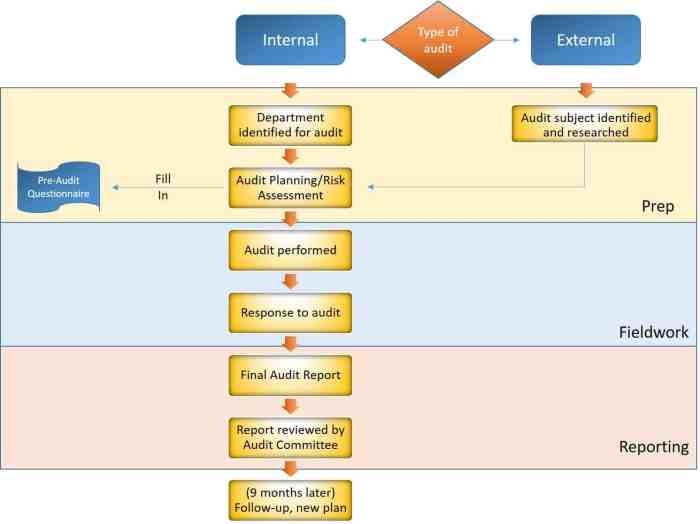
A thorough assessment of internal controls is paramount before commencing any financial audit. A strong internal control system minimizes the risk of material misstatement in the financial statements and provides a framework for efficient and effective operations. Understanding the existing controls allows auditors to tailor their audit procedures, focusing on areas of higher risk and optimizing the use of resources.
Importance of Assessing Internal Controls
Assessing internal controls helps auditors understand the inherent risks within the organization. This involves evaluating the design and operating effectiveness of controls related to authorization, recording, custody, and segregation of duties. By understanding these controls, auditors can determine the reliability of the financial information and identify potential areas of weakness. A well-designed system of internal controls reduces the likelihood of errors and fraud, ultimately leading to more accurate and reliable financial reporting.
For instance, a robust inventory control system, including regular stock counts and reconciliation procedures, significantly minimizes the risk of inventory theft or misstatement.
Methods for Identifying Potential Risks and Vulnerabilities
Identifying potential risks and vulnerabilities requires a multifaceted approach. This includes reviewing organizational charts to assess segregation of duties, analyzing transaction processing procedures, interviewing key personnel to gain an understanding of their roles and responsibilities, and examining relevant documentation such as policies and procedures manuals. Walkthroughs of key processes can reveal control weaknesses. Furthermore, analyzing past audit reports and considering industry best practices can help identify potential risks.
For example, analyzing sales data might reveal unusually high or low sales figures for certain periods, potentially indicating fraudulent activity or a need for better sales forecasting.
Documenting the Internal Control Environment and Weaknesses
A comprehensive documentation of the internal control environment is crucial. This documentation should include flowcharts illustrating key processes, narratives describing the controls in place, and a detailed assessment of control effectiveness. Any identified weaknesses should be clearly documented, including their potential impact on the financial statements. This documentation serves as a valuable tool for the audit team, providing a clear understanding of the organization’s control environment and facilitating the development of appropriate audit procedures.
For instance, a weakness in the accounts payable process, such as a lack of independent review of invoices before payment, could be documented with a flowchart illustrating the process and a narrative explaining the absence of this crucial control.
Best Practices for Mitigating Identified Risks
Mitigating identified risks involves implementing corrective actions to address the weaknesses in the internal control system. This may involve recommending changes to policies and procedures, enhancing segregation of duties, improving monitoring activities, or implementing new controls altogether. The effectiveness of these mitigating actions should be assessed during the audit process. For example, if a lack of authorization controls for large expenditures is identified, the organization could implement a system of dual authorization for all payments exceeding a certain threshold.
Regular review and updates of internal controls are also essential to ensure they remain effective in mitigating risks.
Following Up on Audit Findings and Recommendations
Following up on audit findings and recommendations is crucial for ensuring that identified weaknesses are addressed and prevented from recurring. This process involves a structured approach to monitoring corrective actions, assessing their effectiveness, and ultimately improving the organization’s internal control environment. A well-defined follow-up process demonstrates a commitment to accountability and continuous improvement.The process of following up on audit findings and recommendations typically involves several key steps, each designed to ensure the timely and effective remediation of identified issues.
Monitoring Corrective Action Implementation
Effective monitoring requires a clear understanding of the agreed-upon corrective actions. This includes knowing who is responsible, the deadlines for implementation, and the specific steps required. Regular progress reports, perhaps weekly or monthly depending on the complexity of the issue, should be requested from responsible parties. These reports should detail the status of each corrective action, highlighting any challenges encountered and outlining proposed solutions.
For instance, if an audit uncovered a weakness in the segregation of duties, monitoring would involve checking if the necessary changes to job responsibilities have been implemented and are being followed. Visual aids, like a simple project management chart tracking the progress of each corrective action, can be highly beneficial.
Assessing the Effectiveness of Corrective Actions
Once corrective actions are implemented, their effectiveness must be rigorously assessed. This assessment should verify that the actions have successfully addressed the root cause of the identified weakness. For example, if the audit identified a vulnerability in the system’s access controls, the assessment would verify that the implemented security patches have effectively mitigated the risk. Re-testing of controls and processes is often necessary to confirm their effectiveness.
This could involve reviewing updated documentation, conducting interviews with relevant personnel, and re-performing procedures to verify their efficacy. Any persistent issues should be promptly addressed through further corrective actions.
Best Practices for Addressing and Preventing Recurring Weaknesses
Several best practices contribute to ensuring that identified weaknesses are addressed and prevented from recurring. Regular management reviews of audit findings and implemented corrective actions are essential. This ensures that issues are not overlooked and that appropriate follow-up occurs. Furthermore, incorporating audit findings into employee training programs can significantly improve awareness and understanding of control procedures, preventing future occurrences.
Finally, a robust system for tracking and reporting on audit findings and corrective actions, ideally integrated with the organization’s risk management system, allows for better monitoring and facilitates proactive identification of potential weaknesses. This could involve using a dedicated software solution or a well-maintained spreadsheet that tracks all findings, their status, and the associated corrective actions. The key is to establish a feedback loop that continuously improves the internal control environment.
Conducting a successful in-house financial audit is a significant undertaking, demanding thorough preparation, meticulous execution, and a commitment to accuracy. By following a structured approach, as Artikeld in this guide, organizations can effectively assess their financial health, identify vulnerabilities, and implement improvements. The process, while demanding, empowers businesses with valuable internal control insights, leading to greater financial stability and informed decision-making.
Remember, continuous improvement is key; regular internal audits are crucial for maintaining financial integrity and achieving long-term financial goals.
Detailed FAQs
What qualifications should my internal audit team possess?
Team members should possess relevant accounting certifications (e.g., CPA) or significant experience in financial auditing. A mix of skills, including accounting, auditing, and data analysis, is beneficial.
How often should I conduct an in-house financial audit?
Frequency depends on factors like company size, complexity, and risk profile. Annual audits are common, but more frequent audits may be necessary for high-risk industries or organizations with rapid growth.
What software tools can assist with an in-house audit?
Various software solutions aid in data analysis, documentation, and report generation. Consider tools specializing in audit management, data analytics, and accounting software integration.
What if I uncover significant fraud during the audit?
Immediately involve legal counsel and potentially external forensic accountants. Document all findings meticulously and follow established internal protocols for reporting fraud.