
Securing a comfortable and financially sound retirement requires careful planning and a proactive approach. This comprehensive guide delves into the essential aspects of defining, achieving, and maintaining your financial goals for retirement. From setting realistic expectations and choosing appropriate investment vehicles to managing expenses and mitigating risks, we’ll explore the strategies necessary to build a secure financial future.
We will cover various retirement savings strategies, including the benefits and drawbacks of different retirement plans such as 401(k)s and IRAs. Understanding the potential hidden costs of retirement, like healthcare and long-term care, is crucial, and we’ll provide practical tips for managing expenses effectively. Finally, we’ll discuss the importance of estate planning and legacy considerations to ensure your assets are distributed according to your wishes.
Defining Retirement Financial Goals
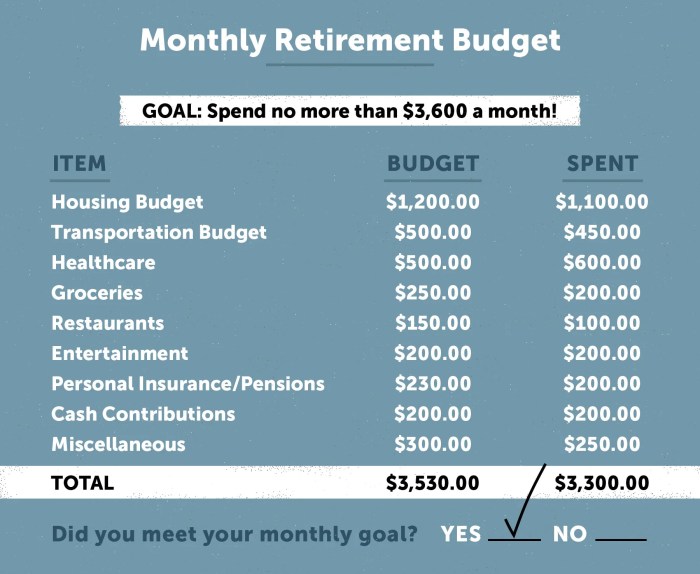
Planning for a comfortable and secure retirement requires a well-defined financial strategy. This involves setting realistic and achievable goals, considering various factors influencing your financial needs during retirement. A comprehensive plan ensures you have enough resources to maintain your desired lifestyle, address potential health concerns, and enjoy your retirement years to the fullest.
A comprehensive retirement financial plan goes beyond simply saving a lump sum. It’s a holistic approach encompassing several key components, working together to ensure financial security in retirement.
Retirement Income Needs
Determining your required retirement income is crucial. This involves estimating your essential living expenses, such as housing, utilities, food, and transportation. Consider inflation; costs will likely rise over time. A common approach involves estimating your current expenses and adjusting them upwards to account for inflation and anticipated lifestyle changes. For example, someone currently spending $50,000 annually might need $75,000 in 20 years, accounting for a moderate inflation rate.
Additional income sources, such as Social Security benefits, pensions, or part-time work, should also be factored into the calculation.
Healthcare Costs in Retirement
Healthcare expenses represent a significant and often unpredictable cost in retirement. Medical insurance premiums, prescription drugs, and potential long-term care costs can quickly deplete savings. Planning for these expenses requires careful consideration. It’s beneficial to research potential healthcare costs in your area, considering your current health status and potential future needs. Estimating these costs, even conservatively, and incorporating them into your retirement plan is vital.
For example, factoring in $10,000 annually for healthcare costs might be prudent, but this should be adjusted based on individual circumstances and anticipated healthcare needs.
Leisure and Travel Activities
Retirement often presents opportunities for leisure and travel. These activities contribute significantly to overall well-being and should be considered when setting financial goals. The cost of these activities varies greatly depending on personal preferences. For instance, someone planning frequent international travel will require substantially more funds than someone who prefers local activities. Budgeting for these activities, even if it’s just a modest amount for occasional outings or small trips, ensures that retirement isn’t solely focused on essential expenses.
Retirement Financial Goal Setting Worksheet
| Category | Annual Estimated Cost (Today’s Dollars) | Annual Estimated Cost (Adjusted for Inflation) | Notes |
|---|---|---|---|
| Housing | $15,000 | $22,500 | Includes property taxes, insurance, and maintenance |
| Utilities | $3,000 | $4,500 | Electricity, water, gas, internet |
| Food | $6,000 | $9,000 | Groceries, dining out |
| Transportation | $2,000 | $3,000 | Car payments, gas, insurance, public transport |
| Healthcare | $10,000 | $15,000 | Medical insurance, prescriptions, etc. |
| Leisure/Travel | $4,000 | $6,000 | Hobbies, vacations |
| Total Annual Estimated Cost (Adjusted for Inflation) | $60,000 |
Aligning Retirement Goals with Personal Values and Lifestyle
Retirement goals should reflect personal values and desired lifestyle. Someone prioritizing travel might allocate more funds towards leisure activities, while someone valuing community involvement might allocate funds towards charitable contributions. Aligning financial goals with personal values ensures a fulfilling and meaningful retirement. For example, an individual who values spending time with family might budget for regular family gatherings and events, while someone who values personal growth might allocate funds for educational courses or workshops.
This personalized approach ensures that retirement funds are used to support a life that is truly meaningful and enjoyable.
Retirement Savings Strategies
Planning for a comfortable retirement requires a well-defined strategy encompassing diverse investment vehicles and a clear understanding of your financial needs. This section explores various retirement savings strategies, outlining their risk profiles, potential returns, and the steps involved in calculating your personal retirement savings goals.
Investment Vehicles for Retirement Savings
Choosing the right investment vehicles is crucial for maximizing returns while managing risk. Different options cater to various risk tolerances and financial goals.
Several investment vehicles are commonly used for retirement savings. These include stocks, bonds, mutual funds, exchange-traded funds (ETFs), and real estate. Stocks represent ownership in a company and offer high growth potential but also carry higher risk. Bonds, on the other hand, are considered less risky as they represent a loan to a company or government, offering a fixed income stream.
Mutual funds pool money from multiple investors to invest in a diversified portfolio of stocks, bonds, or other assets, reducing risk through diversification. ETFs are similar to mutual funds but are traded on stock exchanges like individual stocks. Real estate can provide both income and appreciation, but it’s typically illiquid and requires significant capital investment.
The risk profile of each investment vehicle varies significantly. Stocks generally have the highest risk but also the highest potential return. Bonds are considered lower risk, with lower potential returns. Mutual funds and ETFs offer a balance, with risk levels depending on their underlying holdings. Real estate can be high risk due to market fluctuations and illiquidity, but can offer significant long-term appreciation.
Calculating Retirement Savings Needs
Accurately estimating your retirement savings needs is a critical first step. This involves considering your current income, desired lifestyle, and anticipated expenses in retirement.
- Estimate your retirement expenses: Consider housing, healthcare, travel, food, and other expenses. A reasonable estimate might be 80% of your current pre-retirement income, but this varies greatly depending on individual circumstances.
- Determine your retirement income sources: Include Social Security benefits, pensions, and any other guaranteed income streams. Subtract these from your estimated retirement expenses to determine the shortfall you need to cover with savings.
- Calculate your savings shortfall: This is the difference between your estimated retirement expenses and your other retirement income sources. This represents the amount you need to accumulate through retirement savings.
- Estimate your investment returns: Use a conservative rate of return (e.g., 5-7%) to project how your savings will grow over time. This allows you to determine how much you need to save annually to reach your goal.
- Adjust for inflation: Account for the erosion of purchasing power due to inflation. Use an inflation rate (e.g., 2-3%) to adjust your future expenses and savings goals accordingly.
For example, if your estimated retirement expenses are $60,000 per year, and you anticipate $20,000 in Social Security and pension income, your savings shortfall is $40,000. Using a 6% annual return and a 3% inflation rate, you can use a retirement calculator (widely available online) to determine the necessary annual savings amount.
Retirement Savings Plan Comparison
Various retirement savings plans offer different tax advantages and contribution limits. Understanding these differences is crucial for making informed decisions.
| Plan Name | Contribution Limits (2024, subject to change) | Tax Advantages | Risk Level |
|---|---|---|---|
| 401(k) | $23,000 (employee) + $7,500 (50+) | Tax-deferred growth; contributions may be pre-tax | Medium to High (depending on investment choices) |
| Traditional IRA | $6,500 (individual) + $1,000 (50+) | Tax-deductible contributions; tax-deferred growth | Medium to High (depending on investment choices) |
| Roth IRA | $6,500 (individual) + $1,000 (50+) | Tax-free withdrawals in retirement; contributions are not tax-deductible | Medium to High (depending on investment choices) |
Note: Contribution limits are subject to change annually. Consult a financial advisor for personalized advice.
Financial Advice and Planning for Retirement
Planning for a comfortable and secure retirement requires careful consideration of various financial factors. While self-directed planning is possible, engaging a financial advisor offers significant advantages in navigating the complexities of retirement savings, investment strategies, and risk management. This section explores the role of financial advisors and different approaches to retirement financial planning.
A financial advisor acts as a guide, providing personalized strategies tailored to individual circumstances and goals. Their expertise helps individuals make informed decisions about investments, retirement accounts, and estate planning, ultimately maximizing their retirement income and minimizing potential risks.
The Role of a Financial Advisor in Retirement Planning
Financial advisors offer a wealth of knowledge and experience in managing finances for retirement. They can assist with developing a comprehensive retirement plan, including setting realistic goals, determining savings needs, selecting appropriate investment vehicles, and managing risk. Their services extend beyond investment management; they also provide guidance on tax optimization strategies, estate planning, and managing retirement income. This personalized support ensures that individuals are well-prepared for the financial realities of retirement, potentially mitigating stress and uncertainty.
For example, an advisor can help someone nearing retirement understand the implications of various withdrawal strategies from their 401(k) or IRA accounts, optimizing for tax efficiency and longevity of funds.
Comparison of Holistic and Targeted Financial Planning Approaches
Two primary approaches to financial planning exist: holistic and targeted. A holistic approach considers all aspects of an individual’s financial life, encompassing retirement planning alongside debt management, insurance needs, and estate planning. This integrated approach ensures that all financial elements work synergistically towards overall financial well-being. A targeted approach, conversely, focuses specifically on retirement planning, concentrating solely on maximizing retirement savings and investment growth.
While effective for streamlining efforts, it may overlook potential synergies with other financial areas. For instance, a holistic plan might address high-interest debt reduction alongside retirement savings to maximize overall financial health, while a targeted plan might focus solely on maximizing 401k contributions.
Key Questions to Ask a Financial Advisor
Before engaging a financial advisor, it’s crucial to gather pertinent information and clarify expectations. The following questions provide a framework for a productive initial consultation.
Asking these questions will help you find a financial advisor who understands your needs and can provide tailored advice.
- What is your experience in retirement planning, and what is your investment philosophy?
- What fees do you charge, and how are they structured?
- What is your process for developing a retirement plan, and how often will we review it?
- What types of investment strategies do you recommend, and how do they align with my risk tolerance and time horizon?
- How do you handle market volatility and economic downturns?
- Can you provide references from past clients?
- What is your approach to estate planning and tax optimization in retirement?
- How will you help me manage my retirement income once I retire?
Financial Auditing and Risk Management in Retirement
Entering retirement is a significant life transition, marking a shift from accumulating assets to carefully managing them for a potentially extended period. Maintaining financial well-being during this phase requires proactive planning and consistent monitoring, which is where regular financial audits and robust risk management strategies play a crucial role. Failing to do so can jeopardize the financial security retirees worked so hard to achieve.Regular financial audits are essential for ensuring your retirement plan stays on track and your financial goals remain achievable.
These audits involve a thorough review of your income sources, expenses, investments, and overall financial health. They provide a clear picture of your current financial standing and help identify any potential problems early on, allowing for timely adjustments. By regularly assessing your financial position, you can maintain control and make informed decisions to adapt to unforeseen circumstances.
The Importance of Regular Financial Audits
A comprehensive financial audit goes beyond simply checking account balances. It involves a detailed analysis of your investment portfolio’s performance, assessing its alignment with your risk tolerance and long-term goals. It also includes a review of your income streams, ensuring they are sufficient to cover your living expenses and anticipated future costs, such as healthcare expenses. Furthermore, a regular audit allows for the identification of areas where you can optimize your spending and maximize your savings.
For example, you might discover opportunities to lower insurance premiums or consolidate debt to reduce interest payments. This proactive approach allows you to make necessary adjustments to your spending and investment strategies to ensure your retirement funds last throughout your retirement years. Consider scheduling annual reviews with a financial advisor to facilitate this process.
Mitigating Inflation and Longevity Risks
Retirement often spans several decades, exposing retirees to significant financial risks, primarily inflation and longevity risk. Inflation erodes the purchasing power of your savings over time, meaning that the same amount of money will buy less in the future. Longevity risk, on the other hand, refers to the possibility of outliving your retirement savings. To mitigate inflation risk, it’s crucial to invest in assets that historically outpace inflation, such as stocks and real estate.
Diversification across different asset classes is also vital. To mitigate longevity risk, retirees should aim for a diversified income stream, including Social Security, pensions, and potentially part-time work or rental income. Regularly reviewing and adjusting your investment strategy is critical to maintain a balance between growth and risk mitigation. For example, a retiree might adjust their portfolio to include a higher proportion of fixed-income securities as they age to reduce volatility.
Safeguarding Assets and Protecting Against Fraud
Protecting your hard-earned retirement savings from fraud is paramount. Retirees are often targeted by scammers due to their accumulated wealth and potential vulnerability. A proactive approach is essential to safeguarding your assets. This includes being wary of unsolicited investment opportunities, thoroughly researching any financial advisor before entrusting them with your funds, and regularly monitoring your bank accounts and credit reports for any unauthorized activity.
Familiarize yourself with common fraud schemes targeting seniors and be vigilant in protecting your personal information. Consider using strong passwords, enabling two-factor authentication, and regularly reviewing your financial statements for any discrepancies. In the event of suspected fraud, immediately report it to the appropriate authorities and your financial institution.
Government Benefits and Retirement Income
Planning for retirement involves understanding the various sources of income available, and government benefits play a significant role for many retirees. These programs provide crucial financial support and can significantly impact your overall retirement security. Understanding eligibility requirements and the application process is vital for maximizing your benefits.
Social Security Benefits
Social Security provides retirement, disability, and survivor benefits to eligible individuals and their families. Eligibility is primarily based on work history and contributions to the Social Security system. To be eligible for retirement benefits, individuals generally need to have earned a certain number of work credits throughout their working life. The amount of monthly benefits received depends on several factors, including the individual’s earnings history and the age at which they begin receiving benefits.
Early retirement is possible, but it results in a permanently reduced monthly payment. Delaying retirement beyond the full retirement age increases the monthly benefit amount. Applying for Social Security benefits is typically done online through the Social Security Administration’s website or by contacting them directly.
Medicare Benefits
Medicare is a federal health insurance program primarily for individuals aged 65 and older, and certain younger people with disabilities. Eligibility is largely based on age and work history (through Social Security contributions) or disability status. Medicare offers different parts covering various aspects of healthcare, including hospital insurance (Part A), medical insurance (Part B), Medicare Advantage plans (Part C), and prescription drug coverage (Part D).
The costs associated with Medicare vary depending on the plan selected and individual circumstances. Enrollment in Medicare typically occurs during a specific enrollment period.
Other Government Programs Supplementing Retirement Income
Beyond Social Security and Medicare, several other government programs can provide financial assistance during retirement. These programs often target specific demographics or circumstances. For example, Supplemental Security Income (SSI) provides financial assistance to low-income elderly individuals and disabled adults and children. State-sponsored programs also exist and vary widely in their benefits and eligibility requirements. Some states offer additional assistance with healthcare costs or property taxes for seniors.
Veterans may be eligible for specific benefits through the Department of Veterans Affairs, including healthcare and pension programs.
Government Retirement Benefit Summary
| Benefit Type | Eligibility Criteria | Benefit Amount (General Overview) | Application Process |
|---|---|---|---|
| Social Security Retirement | Work history and sufficient work credits | Varies based on earnings history and retirement age | Online application through the Social Security Administration website or by phone |
| Medicare | Age 65 or older, or younger with qualifying disability | Varies depending on the part of Medicare and chosen plan | Online application through the Centers for Medicare & Medicaid Services website or by phone |
| Supplemental Security Income (SSI) | Low income, age 65 or older, or disability | Varies based on income and living expenses | Online application through the Social Security Administration website or by phone |
| State-Sponsored Programs (Examples vary by state) | Varies by program and state residency | Varies widely by program and state | Varies by program and state; typically involves an application through the relevant state agency |
| Veterans Benefits (Examples vary by veteran status) | Veteran status and often service-connected disability | Varies based on veteran status, service history, and disability rating | Application through the Department of Veterans Affairs |
Planning for retirement is a multifaceted journey that demands careful consideration of various factors. By thoughtfully defining your financial goals, strategically saving and investing, managing expenses prudently, and seeking professional guidance when needed, you can significantly enhance your chances of achieving a fulfilling and financially secure retirement. Remember, proactive planning and regular review are key to ensuring your retirement plan remains aligned with your evolving needs and circumstances.
FAQ Overview
How much should I save for retirement?
The amount you need depends on your desired lifestyle, current income, and the length of your retirement. Financial advisors can help you calculate a personalized estimate.
When should I start saving for retirement?
The sooner you start, the better. Even small contributions early on can significantly grow over time due to compound interest.
What if I don’t have a 401(k) through my employer?
You can still save for retirement through individual retirement accounts (IRAs), such as traditional or Roth IRAs.
How can I protect myself against inflation during retirement?
Consider investing in assets that historically outpace inflation, such as stocks and real estate. Regularly rebalancing your portfolio is also important.
What is the role of a financial advisor in retirement planning?
A financial advisor provides personalized guidance on investment strategies, risk management, and financial planning, helping you create and maintain a comprehensive retirement plan tailored to your individual circumstances.


