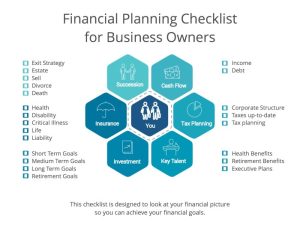
Navigating the financial landscape as an entrepreneur can feel like charting uncharted waters. Success hinges not just on a brilliant business idea, but on a robust financial strategy. This guide delves into the crucial aspects of setting, achieving, and maintaining sound financial goals specifically designed for the unique challenges and opportunities faced by entrepreneurs.
From securing initial funding and crafting a sustainable budget to managing cash flow, mitigating risks, and planning for long-term growth, we’ll explore practical strategies and tools to help you build a financially secure and thriving business. Understanding your financial goals is paramount; this guide provides the framework to transform your vision into a concrete, achievable reality.
Defining Financial Goals for Entrepreneurs
Entrepreneurs, unlike traditional employees, have a unique relationship with their finances. Their personal financial well-being is intrinsically linked to the success of their business. Defining clear and attainable financial goals is therefore crucial for both personal satisfaction and business sustainability. This requires a nuanced understanding of financial planning that considers both short-term operational needs and long-term wealth creation strategies.Financial goals for entrepreneurs encompass all aspects of their financial life, from managing day-to-day business expenses to securing long-term financial independence.
These goals should be aligned with the overall business vision and personal aspirations, forming a cohesive roadmap for financial success. They go beyond simply making a profit; they encompass building a sustainable business model, securing funding, managing debt effectively, and planning for future growth and eventual exit strategies. Failing to define these goals can lead to inconsistent financial performance and hinder the overall success of the venture.
Short-Term, Mid-Term, and Long-Term Financial Goals
Short-term financial goals for entrepreneurs typically focus on immediate operational needs and cover a time horizon of one year or less. Examples include securing seed funding, achieving profitability within the first six months, paying off immediate debts, or managing cash flow to ensure smooth operations. These goals are crucial for business survival and laying the foundation for future growth.Mid-term financial goals typically span one to five years.
These goals often involve achieving specific milestones such as expanding into new markets, increasing revenue by a certain percentage, securing a Series A funding round, or developing new product lines. Success in these mid-term goals provides the momentum needed to achieve long-term ambitions.Long-term financial goals for entrepreneurs often extend beyond five years and can encompass a wide range of aspirations.
Examples include achieving a specific level of annual revenue, securing a successful exit through an acquisition or IPO, building a significant net worth, or establishing a lasting legacy through the business. These goals require a long-term vision and consistent effort to achieve. They often involve significant risk-taking and a commitment to sustained growth.
A Framework for Setting SMART Financial Goals
Setting SMART financial goals is essential for entrepreneurs to ensure their objectives are clear, measurable, and achievable. This framework provides a structured approach to goal setting, leading to increased accountability and a higher likelihood of success.The SMART framework stands for:
Specific: Clearly define the goal, leaving no room for ambiguity. Instead of “Increase revenue,” a specific goal would be “Increase revenue by 25% within the next fiscal year.”
Measurable: Establish quantifiable metrics to track progress. For example, instead of “Improve cash flow,” a measurable goal could be “Increase monthly cash flow by $10,000 by Q4.”
Achievable: Ensure the goal is realistic and attainable given the current resources and market conditions. An ambitious but achievable goal might be “Secure $500,000 in seed funding within six months,” based on a realistic market analysis and funding strategy.
Relevant: The goal should align with the overall business strategy and personal financial objectives. For example, a goal to “reduce operating expenses by 15%” is relevant if the business is facing profitability challenges.
Time-bound: Set a specific deadline to create urgency and accountability. A time-bound goal would be “Achieve profitability within 12 months of launch.”
By applying this framework, entrepreneurs can create a comprehensive financial plan that guides their business towards sustainable growth and long-term success. Consistent monitoring and adjustments are essential to adapt to changing market conditions and ensure the goals remain relevant and achievable.
Funding and Capital Acquisition Strategies
Securing sufficient funding is a critical juncture for any entrepreneur. The path to financial stability and growth hinges on selecting the right capital acquisition strategy, carefully weighing the pros and cons of each option available. Understanding these different funding avenues is crucial for building a sustainable and successful business.Funding your entrepreneurial venture involves navigating a diverse landscape of options, each with its own unique characteristics and implications.
Choosing the right funding method will significantly impact your business’s trajectory, influencing everything from growth rate to ownership structure and long-term financial health. Careful consideration of your business’s stage, risk tolerance, and long-term goals is paramount in making an informed decision.
Bootstrapping
Bootstrapping involves funding your business primarily through personal savings, revenue generated from sales, and operational efficiency. This method avoids external debt or equity dilution, granting the entrepreneur complete control. However, it often limits growth potential due to the restricted capital available.
Angel Investors
Angel investors are high-net-worth individuals who provide capital in exchange for equity in the company. They often bring valuable mentorship and industry connections, but the equity dilution can be significant. Securing angel investment typically requires a strong business plan and a compelling pitch.
Venture Capital
Venture capital firms invest in high-growth potential businesses in exchange for equity. They provide substantial capital but often demand significant equity and influence over the company’s strategic direction. Venture capital is usually reserved for companies with substantial scalability potential.
Loans
Loans from banks or other financial institutions provide debt financing. While this preserves equity, it necessitates regular repayments and can burden the business with interest expenses. Securing a loan requires a strong credit history and a well-structured business plan demonstrating repayment capability.
Comparison of Funding Methods
The following table summarizes the advantages and disadvantages of each funding method:
| Funding Method | Advantages | Disadvantages | Suitable for |
|---|---|---|---|
| Bootstrapping | Retains full ownership, avoids debt, low risk | Slow growth, limited capital, relies on personal resources | Early-stage ventures with limited capital needs |
| Angel Investors | Access to capital, mentorship, networking opportunities | Equity dilution, potential loss of control, investor expectations | High-growth potential ventures needing seed capital |
| Venture Capital | Significant capital infusion, expertise, strategic guidance | High equity dilution, significant control relinquished, stringent reporting requirements | High-growth, scalable ventures seeking significant funding |
| Loans | Preserves ownership, predictable repayment schedule | Debt burden, interest payments, requires strong credit history | Established businesses with proven revenue streams and strong creditworthiness |
Financial Planning and Budgeting for Startups
Creating a robust financial plan is crucial for startup success. It provides a roadmap for managing resources, securing funding, and achieving long-term financial stability. A well-structured plan allows entrepreneurs to anticipate challenges, make informed decisions, and adapt to changing market conditions. This section details the process of developing a comprehensive financial plan and managing a startup budget.
Developing a Comprehensive Financial Plan
Developing a comprehensive financial plan involves a structured, step-by-step approach. This ensures all aspects of the business’s financial health are considered and accounted for. A well-defined plan allows for proactive management and minimizes the risk of financial instability.
- Define Financial Goals: Clearly articulate short-term and long-term financial objectives. This could include achieving profitability within a specific timeframe, securing a certain level of funding, or reaching a predetermined market share. For example, a goal might be to achieve profitability within the first two years of operation and secure Series A funding by year three.
- Conduct Market Research and Analysis: Thoroughly research your target market, including understanding customer demographics, purchasing behavior, and competitive landscape. This information is essential for accurate revenue projections. For instance, analyzing competitor pricing and market share will help in determining realistic pricing strategies and sales forecasts.
- Develop Revenue Projections: Create realistic revenue projections based on market research and sales forecasts. Consider different scenarios (best-case, worst-case, and most likely) to account for market uncertainty. For example, a SaaS startup might project annual recurring revenue (ARR) growth based on customer acquisition costs and churn rate.
- Forecast Expenses: Detail all anticipated business expenses, including operational costs (rent, utilities, salaries), marketing and sales expenses, research and development costs, and administrative expenses. Use historical data or industry benchmarks where available. For instance, a restaurant startup might estimate food costs based on menu pricing and projected sales volume.
- Perform Cash Flow Analysis: Project cash inflows and outflows over a specific period (e.g., monthly, quarterly, annually). This analysis helps determine when the business will need additional funding and identifies potential cash flow shortages. A simple cash flow statement can illustrate the timing of revenues and expenses, revealing periods of potential shortfalls.
- Develop Funding Strategies: Artikel how the business will secure necessary funding, including bootstrapping, angel investors, venture capital, bank loans, or crowdfunding. Consider the pros and cons of each funding option and its impact on the company’s equity and financial structure. For example, a startup might explore both angel investors and small business loans to fund its initial operations.
- Establish Key Performance Indicators (KPIs): Identify key metrics to track progress towards financial goals. These could include revenue growth, customer acquisition cost, profit margin, and return on investment (ROI). Regular monitoring of these KPIs allows for timely adjustments to the financial plan.
- Regularly Review and Adjust: The financial plan is a living document that should be reviewed and updated regularly (e.g., monthly or quarterly) to reflect changing market conditions and business performance. Flexibility is key to adapting to unforeseen circumstances and ensuring the plan remains relevant.
Key Components of a Startup Budget
A startup budget is a detailed financial roadmap that Artikels projected revenues and expenses. It is a critical tool for managing resources effectively and ensuring the business remains financially viable.
The key components of a startup budget include:
- Revenue Projections: Forecasted sales revenue based on market research, pricing strategy, and sales forecasts. This often includes various scenarios to account for uncertainty.
- Expense Forecasts: A detailed breakdown of all anticipated costs, categorized by type (e.g., operating expenses, marketing expenses, research and development). This should include both fixed and variable costs.
- Cash Flow Analysis: A projection of cash inflows and outflows, showing the timing of revenues and expenses. This helps identify potential cash flow shortages and inform funding needs.
- Funding Sources: Identification of funding sources and their expected contribution to the budget. This might include bootstrapping, loans, or investments.
- Profit and Loss (P&L) Statement Projections: A projected P&L statement showing anticipated revenues, expenses, and net profit or loss for a specific period.
- Balance Sheet Projections: A projected balance sheet showing the anticipated assets, liabilities, and equity of the business at a specific point in time.
Using Financial Planning Tools and Software
Numerous financial planning tools and software applications can streamline the budgeting and financial management process. These tools automate calculations, provide insightful visualizations, and enhance accuracy.
Examples of such tools include:
- Spreadsheet Software (e.g., Microsoft Excel, Google Sheets): These are widely used for creating budgets, projecting cash flows, and tracking financial performance. Their flexibility allows for customization to specific business needs.
- Accounting Software (e.g., QuickBooks, Xero): These applications automate accounting tasks, manage invoices, track expenses, and generate financial reports. They offer features that simplify financial management significantly.
- Financial Planning Software (e.g., LivePlan, Bizplan): These tools are specifically designed for creating comprehensive business plans, including financial projections and analysis. They often include features for generating professional-looking reports and presentations.
Financial Risk Management and Mitigation
Entrepreneurs face a unique set of financial challenges, and understanding and mitigating these risks is crucial for long-term business success. Proactive risk management isn’t just about avoiding losses; it’s about building a resilient business capable of weathering financial storms and seizing opportunities. This section will explore common financial risks and provide practical strategies for mitigation.Financial risks for entrepreneurs are multifaceted and interconnected.
Ignoring them can lead to significant financial losses, hindering growth and potentially leading to business failure. A comprehensive risk management plan is essential for navigating these complexities.
Market Risk
Market risk encompasses the potential for losses due to fluctuations in market conditions. This includes changes in consumer demand, competitor actions, economic downturns, and shifts in technological advancements. For example, a sudden drop in consumer spending could severely impact a retail business, while a new competitor with a superior product could disrupt established market share. Mitigating market risk involves thorough market research, developing flexible business models adaptable to changing conditions, and diversifying revenue streams to reduce dependence on a single product or customer base.
Regularly monitoring market trends and competitor activity is crucial for proactive adaptation.
Credit Risk
Credit risk arises from the possibility that customers or clients will fail to make payments as agreed. This is particularly relevant for businesses extending credit to customers or relying on financing from lenders. For instance, a small business relying heavily on a few large clients faces significant risk if those clients experience financial difficulties. Mitigation strategies include thorough credit checks on customers, implementing robust collection procedures, and diversifying customer base to avoid over-reliance on any single entity.
Securing appropriate insurance coverage, such as accounts receivable insurance, can also provide a safety net.
Liquidity Risk
Liquidity risk refers to the risk of not having enough readily available cash to meet short-term obligations. This can arise from unexpected expenses, slow-paying customers, or difficulties in accessing credit. A classic example is a startup facing unexpected equipment repairs and lacking sufficient funds to cover the cost. Strategies for mitigating liquidity risk include maintaining adequate cash reserves, forecasting cash flow accurately, establishing lines of credit with banks, and implementing efficient inventory management to minimize unnecessary storage costs.
Regularly reviewing financial statements and proactively seeking additional funding when necessary are also essential.
Implementing Financial Controls and Safeguards
A robust system of internal controls is crucial for preventing fraud and mismanagement. This involves establishing clear lines of authority and responsibility, separating duties to prevent conflicts of interest, and implementing regular audits of financial records. For example, requiring dual authorization for large transactions and regularly reconciling bank statements can significantly reduce the risk of embezzlement or accounting errors.
Investing in accounting software with built-in security features and employing qualified personnel with appropriate oversight can further enhance the effectiveness of these controls. Regular training for employees on ethical conduct and financial procedures is also vital.
Financial Advice, Auditing, and Goal Setting
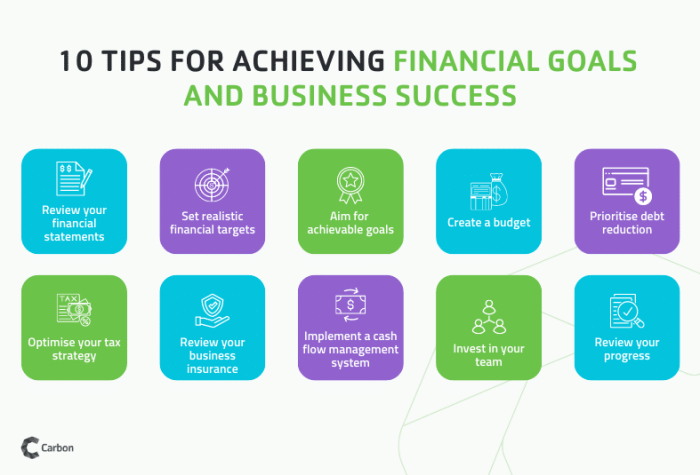
Effective financial management is crucial for entrepreneurial success. This section delves into the vital roles of financial advice, regular audits, and well-defined financial goals in building a sustainable and profitable business. Integrating these three elements creates a robust framework for navigating the complexities of business finance.Financial advice, audits, and goal setting are interconnected processes that, when properly implemented, significantly improve an entrepreneur’s chances of success.
Strategic financial planning, informed by expert advice and supported by regular audits, allows for proactive adjustments, minimizes risks, and ultimately facilitates the achievement of predetermined financial goals.
Financial Advice Tailored to Different Business Stages
Entrepreneurs require different types of financial advice depending on their business’s stage of development. A startup will have vastly different needs than a mature, established company.
- Seed Stage/Startup: Focus should be on securing initial funding, managing cash flow meticulously, and building a solid financial foundation. Advice might include exploring bootstrapping options, securing angel investors or venture capital, and developing a detailed financial model projecting profitability. A key metric here is runway – how long the business can operate before needing more funding.
- Growth Stage: As the business scales, advice shifts towards strategies for managing rapid growth, optimizing profitability, and planning for expansion. This may include securing debt financing, exploring strategic partnerships, and implementing robust accounting systems to track performance across multiple departments. Key metrics shift towards revenue growth, customer acquisition cost, and profitability margins.
- Maturity Stage: At this stage, the focus shifts towards long-term sustainability, succession planning, and maximizing shareholder value. Advice may involve exploring mergers and acquisitions, optimizing tax strategies, and managing complex financial structures. Key metrics include return on investment (ROI), market share, and long-term financial stability.
The Importance and Process of Regular Financial Audits
Regular financial audits provide an independent verification of a company’s financial statements, ensuring accuracy and compliance with accounting standards. This builds trust with investors, lenders, and other stakeholders. The process typically involves:
- Planning: The auditor and company management agree on the scope and timing of the audit.
- Fieldwork: The auditor examines financial records, interviews personnel, and performs various tests to verify the accuracy of financial information.
- Reporting: The auditor issues an audit report that summarizes their findings and expresses an opinion on the fairness of the company’s financial statements.
Best Practices for Setting and Achieving Financial Goals
Setting SMART (Specific, Measurable, Achievable, Relevant, Time-bound) financial goals is crucial. Integrating financial advice and auditing ensures these goals are realistic, achievable, and aligned with the overall business strategy. Regular review and adjustment based on audit findings are key to staying on track. For example, an entrepreneur might set a goal to achieve a 20% profit margin within two years, regularly tracking progress against this goal and adjusting strategies based on the insights gained from financial audits.
This iterative approach, combining proactive goal-setting with the objective perspective provided by audits, allows for course correction and maximizes the chances of success.
Financial Planning and Forecasting for Growth
Financial planning is the cornerstone of sustainable business growth. A well-defined financial plan provides a roadmap, guiding strategic decisions and resource allocation to achieve ambitious expansion goals. Without a robust financial plan, entrepreneurs risk mismanaging resources, missing crucial opportunities, and ultimately hindering their company’s potential.Accurate financial forecasting is crucial for securing funding, making informed investment decisions, and navigating market fluctuations.
It allows entrepreneurs to anticipate challenges and proactively develop mitigation strategies, increasing the likelihood of success during periods of rapid growth. Forecasting involves analyzing historical data, market trends, and competitive landscapes to project future financial performance.
Financial Forecasting Methods
Several methods exist for creating accurate financial forecasts. These range from simple projections based on historical data to more sophisticated models incorporating various economic and market factors. The choice of method depends on the complexity of the business, the availability of data, and the level of detail required.
Sales Forecasting
Sales forecasting forms the foundation of most financial projections. Several techniques are commonly employed, including time series analysis (analyzing historical sales data to identify trends and seasonality), regression analysis (identifying relationships between sales and other variables like marketing spend or economic indicators), and market research (gathering data on market size, growth rates, and customer behavior). For example, a company launching a new product might use market research to estimate potential market share and then project sales based on that estimate.
An established business might use time series analysis to predict sales based on past performance, adjusting for known seasonal variations or anticipated changes in market conditions.
Expense Budgeting
Accurate expense budgeting is critical for controlling costs and ensuring profitability during growth. This involves categorizing expenses (e.g., cost of goods sold, operating expenses, marketing expenses), analyzing historical data, and projecting future expenses based on anticipated growth and changes in operational needs. For instance, a rapidly expanding company might anticipate increased rent costs if it needs to move to larger premises.
Careful expense budgeting ensures that the company can afford its growth trajectory without jeopardizing profitability.
Pro Forma Financial Statements
Pro forma financial statements (income statement, balance sheet, and cash flow statement) are crucial tools for summarizing financial forecasts. These statements present projected financial performance under different scenarios, allowing entrepreneurs to assess the potential impact of various strategic decisions. For example, a pro forma income statement might show projected revenue and expenses for the next three years, under both optimistic and pessimistic sales scenarios.
This provides a range of potential outcomes and helps the entrepreneur make informed decisions about resource allocation and investment.
Visual Representation of Financial Planning and Business Growth
Imagine a graph with “Business Growth” on the y-axis and “Time” on the x-axis. A steadily rising line representing business growth is shown, initially slow, then accelerating. This line is directly correlated with another line representing “Financial Planning Effectiveness,” also rising but showing more pronounced increases at points where significant financial planning initiatives (e.g., securing funding, implementing a new budgeting system) have been implemented.
The graph visually demonstrates that stronger financial planning directly contributes to more rapid and sustained business growth. The graph also shows that periods of flat or declining financial planning effectiveness correspond to slower or stagnated business growth.
Tax Planning and Compliance for Entrepreneurs
Navigating the tax landscape is a crucial aspect of entrepreneurial success. Understanding the tax implications of different business structures and employing effective tax planning strategies can significantly impact profitability and long-term financial health. Failure to comply with tax regulations can lead to penalties, interest charges, and even legal repercussions.Understanding the tax implications of various business structures is paramount for entrepreneurs.
The choice of structure—sole proprietorship, LLC, S corporation, or C corporation—directly influences how your business is taxed and your personal liability.
Tax Implications of Different Business Structures
Sole proprietorships are the simplest structure, where the business and owner are legally the same entity. All business income is reported on the owner’s personal income tax return (Schedule C). This means the owner is personally liable for all business debts and taxes. Limited Liability Companies (LLCs) offer some liability protection, separating the owner’s personal assets from business liabilities.
Taxation depends on how the LLC is structured; it can be taxed as a sole proprietorship, partnership, or corporation. S corporations and C corporations are more complex structures. S corporations pass their profits and losses through to the owners’ personal income tax returns, avoiding double taxation. C corporations are taxed separately from their owners, meaning the corporation pays corporate income tax, and the owners pay taxes on dividends received.
Choosing the right structure requires careful consideration of liability protection, tax implications, and administrative complexity. A consultation with a tax professional is highly recommended.
Strategies for Minimizing Tax Liabilities
Minimizing tax liabilities involves proactive planning and adherence to legal regulations. This isn’t about tax evasion, but rather about legally reducing your tax burden through legitimate means. Several strategies can help achieve this. These include maximizing deductions for business expenses, contributing to retirement plans (like SEP IRAs or Solo 401(k)s), understanding the difference between ordinary income and capital gains, and utilizing tax credits available to small businesses.
Careful record-keeping is crucial for claiming legitimate deductions and credits. Regular consultations with a tax advisor can provide personalized guidance tailored to your specific business circumstances and projected income. They can help identify potential tax savings opportunities and ensure compliance with ever-changing tax laws. Proactive planning is far more effective than reacting to tax liabilities after the fact.
Key Tax Considerations for Entrepreneurs
Effective tax planning requires a comprehensive understanding of several key areas.
- Business Structure Selection: Carefully weigh the tax implications of sole proprietorships, LLCs, S corporations, and C corporations.
- Deductible Expenses: Maintain meticulous records of all legitimate business expenses to maximize deductions.
- Retirement Planning: Utilize tax-advantaged retirement plans to reduce taxable income and build long-term savings.
- Tax Credits: Explore available tax credits for small businesses, such as the research and development credit or the qualified business income (QBI) deduction.
- Quarterly Estimated Taxes: Make timely estimated tax payments to avoid penalties.
- Record Keeping: Maintain accurate and organized financial records to support tax filings and audits.
- Professional Advice: Consult with a tax professional regularly for personalized guidance and compliance support. This is particularly important for navigating complex tax laws and changes in legislation.
Financial Reporting and Analysis for Decision-Making
Accurate and timely financial reporting is the cornerstone of effective decision-making for any entrepreneur. Without a clear understanding of your business’s financial health, strategic choices become mere guesses, potentially leading to missed opportunities or, worse, financial ruin. Regular analysis of key financial metrics provides the crucial insights needed to navigate the complexities of the business world and make informed decisions that drive growth and profitability.Financial reporting provides a structured overview of your business’s financial performance, allowing you to track progress against goals, identify areas of strength and weakness, and make data-driven adjustments to your strategy.
This proactive approach is significantly more effective than reacting to financial crises after they’ve occurred. By regularly reviewing and analyzing your financial reports, you can anticipate potential problems and implement preventative measures, fostering a more resilient and successful business.
Key Financial Ratios and Metrics for Entrepreneurs
Understanding key financial ratios and metrics is essential for gaining a comprehensive view of your business’s performance. These metrics provide quantifiable insights into profitability, liquidity, solvency, and efficiency, enabling you to benchmark your performance against industry averages and identify areas for improvement. Ignoring these crucial indicators can hinder growth and increase the risk of financial instability.
- Profitability Ratios: These ratios reveal how efficiently your business generates profit. Examples include Gross Profit Margin (Gross Profit / Revenue), Net Profit Margin (Net Profit / Revenue), and Return on Assets (Net Profit / Total Assets). A high gross profit margin indicates efficient cost management in production, while a high net profit margin reflects overall profitability after all expenses are considered.
Return on Assets measures how effectively your assets are used to generate profit.
- Liquidity Ratios: These ratios assess your business’s ability to meet its short-term obligations. Key ratios include Current Ratio (Current Assets / Current Liabilities) and Quick Ratio ((Current Assets – Inventory) / Current Liabilities). A healthy current ratio (generally above 1) suggests sufficient liquid assets to cover immediate debts. The quick ratio provides a more conservative measure by excluding inventory, which may not be easily converted to cash.
- Solvency Ratios: These ratios evaluate your business’s long-term financial stability and its ability to meet its long-term obligations. Debt-to-Equity Ratio (Total Debt / Total Equity) and Debt-to-Asset Ratio (Total Debt / Total Assets) are commonly used. A high debt-to-equity ratio indicates reliance on debt financing, potentially increasing financial risk. A high debt-to-asset ratio suggests a significant portion of your assets are financed by debt.
- Efficiency Ratios: These ratios measure how effectively your business utilizes its resources. Inventory Turnover (Cost of Goods Sold / Average Inventory) and Accounts Receivable Turnover (Net Credit Sales / Average Accounts Receivable) are examples. High inventory turnover suggests efficient inventory management, while a high accounts receivable turnover indicates efficient collection of payments from customers.
Interpreting Financial Statements to Identify Areas for Improvement
Financial statements, including the balance sheet, income statement, and cash flow statement, provide a detailed picture of your business’s financial position. Analyzing these statements allows you to pinpoint areas for improvement and uncover growth opportunities. For instance, a consistently low gross profit margin might indicate a need to renegotiate supplier contracts or explore more cost-effective production methods. A high accounts receivable turnover could suggest a need for stricter credit policies.
Conversely, a low turnover might indicate opportunities to improve sales strategies. Careful analysis of these statements allows for proactive adjustments to maximize profitability and sustainability.For example, imagine a bakery with a consistently low net profit margin despite high sales. Analysis of the income statement might reveal high operating expenses, perhaps due to inefficient staffing or high rent.
By comparing these expenses to industry benchmarks, the bakery owner can identify areas for cost reduction, potentially by streamlining operations or negotiating a better lease agreement. This targeted approach, driven by financial statement analysis, leads to more effective improvements than broad, untargeted cost-cutting measures.
Building a successful entrepreneurial venture requires a clear financial vision and a well-defined plan. This guide has provided a comprehensive overview of the key financial considerations for entrepreneurs, from securing funding and managing cash flow to mitigating risks and planning for growth. By understanding and implementing these strategies, entrepreneurs can lay a solid financial foundation for their business, paving the way for sustainable success and long-term prosperity.
Remember that seeking professional financial advice is crucial throughout this journey.
FAQ Section
What is the difference between a financial goal and a business goal?
While interconnected, business goals focus on overall company objectives (e.g., market share, product launch), while financial goals are the specific, measurable targets related to the company’s financial health (e.g., revenue targets, profit margins).
How often should I review my financial goals?
Regular review is essential. At a minimum, quarterly reviews allow for adjustments based on performance and market changes. More frequent reviews (monthly) are beneficial for startups.
What if my business doesn’t meet my financial goals?
Don’t panic. Analyze why goals were missed. Was the goal unrealistic? Were there unforeseen circumstances? Adjust your strategy, seek expert advice, and revise your goals accordingly.
Flexibility is key.
What are some common mistakes entrepreneurs make with their finances?
Common mistakes include underestimating startup costs, neglecting cash flow management, failing to secure adequate funding, and not seeking professional financial advice.