Navigating the complexities of personal finance can feel daunting, but a well-structured financial plan provides a roadmap to financial security and success. This guide Artikels the key steps involved in creating a comprehensive plan, from defining your financial goals to seeking professional advice when needed. Understanding these steps empowers you to take control of your financial future and work towards achieving your aspirations.
This process isn’t a one-time event; it’s an ongoing journey requiring regular review and adaptation to changing circumstances. Whether you’re aiming for short-term goals like paying off debt or long-term objectives such as retirement planning, a structured approach is crucial. This detailed explanation will equip you with the knowledge and tools to build a personalized financial strategy tailored to your unique needs and ambitions.
Creating a Financial Plan
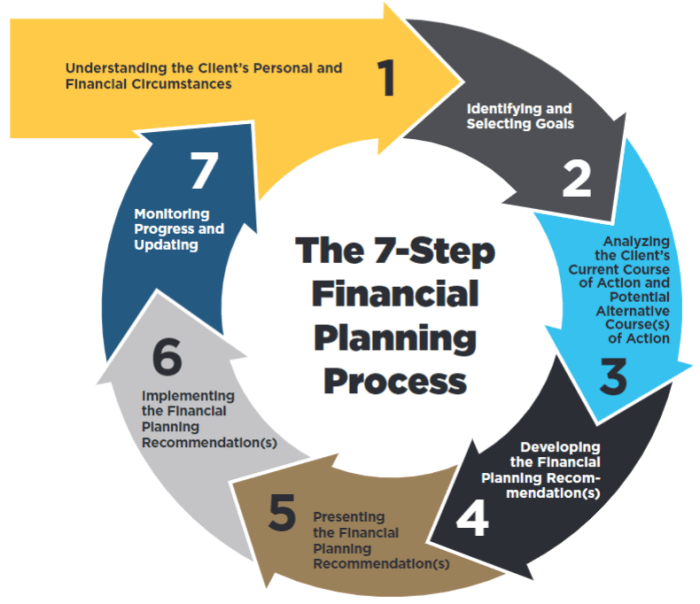
Developing a comprehensive financial plan is crucial for achieving long-term financial security and fulfilling your financial goals. This involves a structured approach to managing your income, expenses, assets, and liabilities to build wealth and achieve financial independence. A well-defined plan acts as a roadmap, guiding your financial decisions and helping you stay on track towards your objectives.
A financial plan typically encompasses several key strategies, each designed to address specific aspects of your financial life. Effective planning requires careful consideration of your current financial situation, future aspirations, and risk tolerance.
Debt Reduction Strategies
Debt reduction is a cornerstone of sound financial planning. High-interest debt, such as credit card balances, can significantly hinder progress towards other financial goals. Strategies for debt reduction include the debt snowball method (paying off the smallest debts first for motivation) and the debt avalanche method (paying off the highest-interest debts first for cost savings). Careful budgeting and disciplined spending are essential for successfully reducing debt.
For example, creating a detailed budget that tracks income and expenses can help identify areas where spending can be reduced to allocate more funds towards debt repayment. Consistent, extra payments on high-interest debt can significantly reduce the overall interest paid and shorten the repayment period.
Investment Planning Strategies
Investment planning involves strategically allocating your savings to generate long-term growth and wealth accumulation. Diversification is key to mitigating risk. This means spreading investments across different asset classes, such as stocks, bonds, and real estate, to reduce the impact of poor performance in any single asset. A well-diversified portfolio can help protect against significant losses while maximizing potential returns.
For example, a balanced portfolio might include a mix of stocks for growth potential, bonds for stability, and real estate for long-term appreciation.
Retirement Planning Strategies
Retirement planning involves saving and investing sufficient funds to maintain your desired lifestyle after retirement. This requires considering factors such as your expected retirement age, estimated expenses in retirement, and potential sources of income, such as Social Security and pensions. Strategies for retirement planning include contributing to employer-sponsored retirement plans (like 401(k)s), opening individual retirement accounts (IRAs), and investing in other tax-advantaged retirement accounts.
The earlier you start saving for retirement, the more time your investments have to grow, benefiting from the power of compounding.
Comparing Investment Options
Stocks represent ownership in a company and offer the potential for high returns but also carry higher risk. Bonds are loans to companies or governments, generally considered less risky than stocks but offering lower potential returns. Mutual funds pool money from multiple investors to invest in a diversified portfolio of stocks, bonds, or other assets, providing diversification and professional management.
Each option has its own risk-return profile, and the best choice depends on individual circumstances and financial goals. For instance, a young investor with a long time horizon might allocate a larger portion of their portfolio to stocks to take advantage of higher growth potential, while an older investor closer to retirement might prefer a more conservative approach with a higher allocation to bonds.
Key Factors in Choosing an Investment Strategy
Several key factors influence the choice of an investment strategy. These include your investment time horizon (how long you plan to invest), risk tolerance (your comfort level with potential losses), and financial goals (what you hope to achieve through investing). Your age and financial situation also play significant roles. A younger investor might tolerate more risk to achieve long-term growth, while an older investor may prioritize capital preservation and income generation.
Understanding your personal circumstances and preferences is crucial for making informed investment decisions.
Sample Financial Plan
This sample plan Artikels a simplified approach and should be adapted to individual circumstances.
This plan assumes a 30-year timeframe and focuses on key milestones. Individual needs will vary significantly.
- Years 1-5: Establish an emergency fund (3-6 months of living expenses), pay off high-interest debt, and start saving for retirement.
- Years 6-10: Increase retirement savings contributions, explore additional investment options (e.g., mutual funds), and potentially start saving for a down payment on a home.
- Years 11-15: Re-evaluate investment portfolio, adjust asset allocation based on changing circumstances, and potentially increase investment contributions.
- Years 16-20: Continue regular contributions to retirement accounts, consider long-term care insurance, and potentially begin planning for children’s education.
- Years 21-25: Rebalance investment portfolio, explore tax optimization strategies, and potentially increase contributions to children’s education savings plans.
- Years 26-30: Focus on maximizing retirement savings, review estate planning documents, and potentially consider downsizing or other adjustments to prepare for retirement.
Implementing and Monitoring the Plan
Creating a solid financial plan is only half the battle; successfully implementing and consistently monitoring it is crucial for achieving your financial goals. This involves actively managing your finances, tracking your progress, and adapting your plan as needed to navigate life’s unexpected twists and turns. Regular review and adjustment are key to ensuring your plan remains relevant and effective over time.Regular review and adjustments ensure your financial plan remains aligned with your evolving needs and circumstances.
Life is dynamic, and your financial goals and priorities may change due to career shifts, family additions, unexpected expenses, or market fluctuations. Without regular review, your plan may become outdated and ineffective, hindering your progress toward financial security. A proactive approach to monitoring and adjusting ensures your plan continues to serve as a reliable roadmap to your financial future.
Regular Review and Plan Adjustments
A well-structured financial plan should be reviewed at least annually, or more frequently if significant life changes occur. This review involves comparing your actual financial performance against your projected figures. For example, if you planned to save $10,000 this year but only managed $8,000, the review helps you identify the shortfall and explore ways to improve savings in the following year.
This might involve reducing discretionary spending, increasing income, or re-evaluating your savings goals. Adjustments may include modifying your budget, altering investment strategies, or reevaluating debt repayment plans. Unexpected events, such as job loss or medical emergencies, require immediate review and potential adjustments to your plan. For instance, if you experience a job loss, you might need to cut expenses, explore alternative income sources, or temporarily suspend some savings goals to prioritize essential needs.
Tracking Progress Toward Financial Goals
Tracking progress is essential to stay motivated and make necessary adjustments. Effective tracking involves regularly monitoring key financial metrics such as net worth, savings rate, debt levels, and investment performance. This can be done manually using spreadsheets or dedicated financial tracking apps and software. For example, you could track your monthly budget against your actual spending, noting any discrepancies.
Similarly, you can monitor your investment portfolio’s performance against your projected returns, adjusting your investment strategy if necessary. Regularly reviewing your progress provides valuable insights into your financial health and helps identify areas requiring attention. For instance, consistent tracking may reveal that your debt repayment strategy is not as effective as anticipated, prompting a shift towards a more aggressive approach.
Adapting the Plan to Unexpected Events
Life often throws curveballs. Unexpected events, such as job loss, illness, or market downturns, can significantly impact your financial plan. Having a contingency plan in place is crucial to navigate these challenges. This might involve maintaining an emergency fund to cover unexpected expenses, having adequate insurance coverage, or building flexibility into your budget to accommodate unforeseen circumstances.
For instance, if a major home repair is needed, you might need to temporarily adjust your savings goals or explore financing options to cover the expense without derailing your long-term financial plan. Flexibility is key; you may need to prioritize certain goals over others depending on the situation.
Utilizing Budgeting Tools and Financial Software
Numerous budgeting tools and financial software programs are available to simplify the monitoring process. These tools often automate many aspects of tracking, providing real-time insights into your financial situation. Many offer features such as automated expense categorization, budget alerts, and investment portfolio tracking. For example, Mint or Personal Capital can automatically track your transactions, categorize your expenses, and generate reports on your spending habits.
Such tools can significantly streamline the monitoring process, providing a clear picture of your financial health and helping you identify areas for improvement. These tools can also assist in forecasting future financial scenarios, helping you make informed decisions and adapt your plan accordingly.
Seeking Professional Financial Advice
Navigating the complexities of personal finance can be daunting. While self-directed learning and online resources offer valuable information, seeking professional financial advice can significantly enhance your financial well-being and help you achieve your goals more effectively. A qualified advisor provides personalized guidance, expertise, and accountability, leading to better-informed decisions and potentially greater financial success.
Benefits of Seeking Professional Financial Advice
Engaging a financial professional offers numerous advantages. They bring specialized knowledge and experience to bear on your unique circumstances, providing objective analysis and strategic planning. This can lead to improved investment strategies, optimized tax planning, and a more comprehensive approach to wealth management than individuals might achieve independently. Furthermore, a financial advisor can provide emotional support and help maintain discipline during market fluctuations, preventing impulsive decisions driven by fear or greed.
Their expertise in areas such as retirement planning, estate planning, and risk management can be invaluable in securing your financial future.
Comparison of Financial Advisors, Planners, and Auditors
Financial advisors, planners, and auditors each play distinct roles in managing finances. Financial advisors offer a broad range of services, including investment management, financial planning, and insurance recommendations. Financial planners focus specifically on developing comprehensive financial plans tailored to individual goals, considering factors like retirement, education, and estate planning. Financial auditors, on the other hand, examine financial records to verify their accuracy and compliance with regulations.
While they don’t offer direct financial advice, their work is crucial for ensuring the integrity of financial information used in planning and decision-making. For example, an auditor’s report might be used to validate financial statements submitted as part of a loan application.
Importance of Due Diligence in Selecting a Financial Advisor
Choosing the right financial advisor is a critical decision. Thorough due diligence is essential to ensure you find someone competent, trustworthy, and aligned with your values and goals. This involves verifying their credentials, checking for disciplinary actions or complaints, understanding their fee structure, and assessing their experience and investment philosophy. Seeking referrals from trusted sources, such as friends, family, or other professionals, can also be beneficial.
Reviewing client testimonials and understanding their investment approach—whether active or passive, risk-tolerant or conservative—are crucial steps in making an informed choice. Transparency and open communication are also vital aspects to consider.
Types of Financial Audits and Their Relevance to Personal Financial Planning
While personal financial audits aren’t as common as corporate audits, the principles are similar. A personal financial audit might involve a review of your income, expenses, assets, and liabilities to identify areas for improvement or potential risks. This could include verifying the accuracy of tax returns or assessing the effectiveness of your investment portfolio. While you may not need a formal audit, periodically reviewing your own financial statements and comparing them against your financial plan can serve a similar purpose.
This self-assessment can help you track progress, identify discrepancies, and make necessary adjustments to your plan.
Questions to Ask Potential Financial Advisors
Before engaging a financial advisor, it’s crucial to gather relevant information. A thorough understanding of their services, fees, and approach is vital for a successful working relationship. Therefore, consider asking the following questions:
- What are your credentials and experience?
- What is your investment philosophy and approach?
- What fees do you charge, and how are they structured?
- What is your process for developing a financial plan?
- How often will we meet to review my progress?
- How do you handle conflicts of interest?
- Can you provide references from previous clients?
- What is your disciplinary history, if any?
- How do you communicate with clients, and how frequently?
- What is your approach to risk management?
Creating a robust financial plan is a significant step towards achieving long-term financial well-being. By following these steps – defining goals, assessing your current situation, creating a plan, implementing and monitoring it, and seeking professional guidance when necessary – you gain a clear path toward financial success. Remember, consistent effort and periodic review are key to ensuring your plan remains relevant and effective throughout your financial journey.
Proactive planning allows you to navigate unexpected challenges and confidently pursue your financial aspirations.
Questions and Answers
What if my financial situation changes significantly (e.g., job loss, unexpected expense)?
Your financial plan should be flexible. Re-evaluate your goals and budget, prioritize essential expenses, and consider seeking professional advice to explore options like debt consolidation or adjusting your investment strategy.
How often should I review my financial plan?
At least annually, and more frequently if there are significant life changes (marriage, birth of a child, job change, etc.). Regular reviews ensure your plan remains aligned with your evolving goals and circumstances.
What is the difference between a financial advisor and a financial planner?
While the terms are often used interchangeably, financial planners typically focus on long-term financial planning, while financial advisors offer a broader range of services, including investment management and insurance.
Are there free resources available to help with financial planning?
Yes, many government websites and non-profit organizations offer free resources, including budgeting tools, educational materials, and financial calculators.